---
title: How Can B2B Video Marketing Boost Sales in 2026?
description: Struggling to drive sales? Discover how B2B video marketing can boost ROI, improve visibility, and convert leads in 2026.
image: https://www.saaspirin.co/hubfs/image%20-%202026-04-08T104858.306.png
---
[](https://www.saaspirin.co/)
[](https://www.saaspirin.co/)
- [Pricing](https://www.saaspirin.co/pricing)
- [Our work](https://www.saaspirin.co/work)
- [About us](https://www.saaspirin.co/about)
- [Blog](https://www.saaspirin.co/blog)
[Book A Discovery Call](https://www.saaspirin.co/contact)
[Book A Discovery Call](https://www.saaspirin.co/contact)
[Book A Discovery Call](https://www.saaspirin.co/contact)
- [Pricing](https://www.saaspirin.co/pricing)
- [Our work](https://www.saaspirin.co/work)
- [About us](https://www.saaspirin.co/about)
- [Blog](https://www.saaspirin.co/blog)
[Book A Discovery Call](https://www.saaspirin.co/contact)
# How Can B2B Video Marketing Boost Sales in 2026?
By [**Nicolas Jacobeus**](https://www.saaspirin.co/blog/author/nicolas-jacobeus) on April 8, 2026

## Key Highlights
- B2B video marketing helps brands communicate complex solutions effectively and showcase value through engaging visuals.
- It builds trust and credibility by featuring real customer stories and authentic brand messaging.
- A video marketing for B2B content strategy increases engagement across platforms like LinkedIn, YouTube, and email campaigns.
- Different B2B video formats, such as explainers, demos, and testimonials, guide prospects through each stage of the sales funnel.
- Consistent, strategic B2B video content enhances brand authority, shortens sales cycles, and drives new ways of long-term business growth.
Ever felt like explaining your B2B product or service with just words and images doesn’t quite do it justice? You’re not alone. Many B2B marketers face this same challenge; they invest in ads, create blogs, and still struggle to make their message stick. That’s where video comes in, making it easier to connect, explain, and engage on a deeper level.
According to [HubSpot’s 2025 Marketing Statistics Report](https://blog.hubspot.com/marketing/video-marketing-statistics), nearly 93% of video marketers say video gives them a positive ROI. And it’s easy to see why. If your business finds it hard to communicate what sets your solution apart, video marketing bridges that gap. It helps you *show* why your product matters, not just talk about it.
This blog will help you understand how B2B video marketing can make your message shine. We’ll cover why it works, how to use it effectively, and how it can boost engagement and ROI for your business.
## What is B2B Video Marketing?
B2B video marketing is all about using video to explain your products or services to other businesses. From demos and tutorials to customer stories, it helps make complex ideas easy to understand, builds trust with decision-makers, and turns your message into something people actually remember.
### Why Does a Strong B2B Video Marketing Strategy Matter for Modern Marketers in 2026?
Video marketing has become the go-to way for B2B businesses to connect and communicate. It helps you:
- Cut through the noise and reach decision-makers faster
- Explain complex products or services clearly
- Engage audiences in a way static content can’t
A smart, video-first B2B strategy isn’t just about creating content; it’s about meeting your audience where they already are. Whether it’s a quick product demo on LinkedIn, a customer story via email, or a short social clip, video humanizes your brand, builds trust, and drives real results.
## What are the Key Benefits of B2B Video Marketing for Sales Growth?
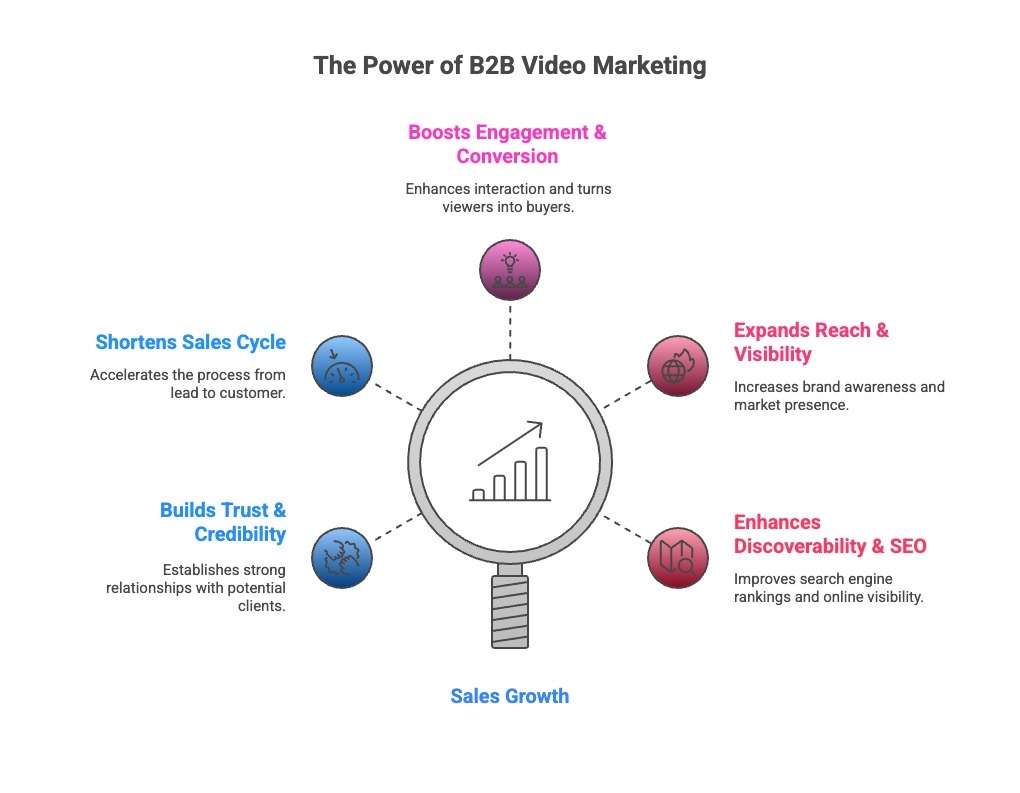
Video isn’t just another format. It’s a “must‑have” in the B2B playbook, especially in Google searches. By showing your story visually, you can engage busy decision‑makers faster, simplify complex ideas, and build trust more quickly.
Below are the key benefits your team can tap into, each backed by research, so you know the numbers add up.
### 1. Builds Trust & Credibility
When you show real people, tell real stories, and share real results through video marketing, your brand feels more human and credible. It builds trust by connecting on a personal level and showing authenticity in action. According to [UpLead’s B2B Marketing Statistics](https://www.uplead.com/b2b-marketing-statistics), **70% of B2B buyers watch videos during their buying journey**, making video a powerful tool to influence decisions and drive conversions.
**Example:** A software firm posts a [client‑testimonial video](https://www.saaspirin.co/blog/video-testimonial-script-examples) where a CFO describes how the product solved a major pain point. That kind of social proof goes further than text alone.
### 2. Shortens the Sales Cycle
Video marketing makes it easy to showcase your product’s features, use cases, and benefits in a clear, engaging way. Instead of expecting prospects to sift through dense text, it delivers your message in a format that’s both memorable and effective. According to [UpLead’s B2B Marketing Statistics](https://www.uplead.com/b2b-marketing-statistics/), companies using video marketing see **49% faster revenue growth** than those that don’t.
**Example:** A consulting business sends a 90‑second demo‑clip via email to shortlisted leads, and those prospects convert faster because they already 'seen' how the service works.
### 3. Boosts Engagement & Conversion
Video marketing draws attention, holds it, and inspires action. It keeps viewers engaged, makes your message more memorable, and encourages them to take the next step, whether that’s learning more, signing up, or making a purchase.
**Example:** On a product‑landing page, you embed a short “How it works” video. Visitors stay longer, understand the benefits faster, and more of them fill in the contact form. In fact, research shows that including videos can [increase landing‑page conversion rates by up to 80%.](https://www.amraandelma.com/top-b2b-video-marketing-statistics)
### 4. Expands Reach & Visibility
A single video can do so much more than just live on one page. You can turn it into social clips, email snippets, or landing page content, reaching your audience wherever they are. It’s no wonder that [91% of businesses worldwide use video as a marketing tool](https://www.yaguara.co/video-marketing-statistics)in 2024. By repurposing one video, you get multiple touchpoints, more eyes on your brand, and a much bigger impact for the same effort.
**Example:** A long‑form webinar is trimmed into 30-second clips for LinkedIn, placed in an email snippet, and added to a product page, each reaching slightly different audience segments.
### 5. Enhances Discoverability & SEO
Search engines and platforms love rich media, and adding video can give your pages a boost. Visitors stay longer, engage more, and your content becomes easier to find — all helping you attract more organic leads. For example, adding product or explainer videos can[increase landing page conversions by up to 72%](https://mconverter.eu/blog/video-marketing-roi-statistics/), making your site more effective at turning visitors into prospects.
**Example:** A manufacturing client adds explainer videos to key service pages, and site visitors spend more time on each page, bounce rate drops, and organic leads grow.
## How Can You Launch Your First B2B Video Marketing Campaign Step by Step?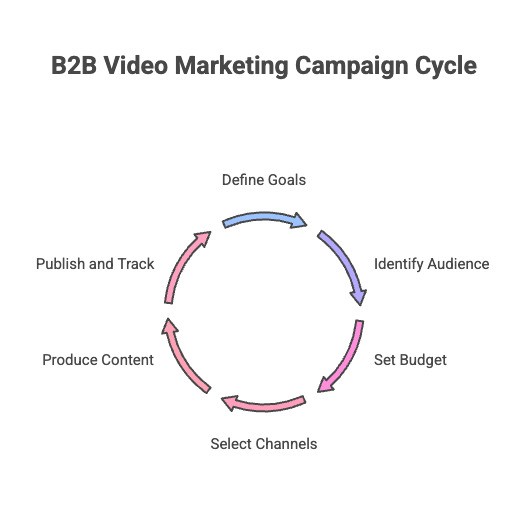
Ready to boost your B2B marketing? Start your first video campaign on social media platforms with a clear plan, pick the right channels like LinkedIn or Facebook, and use data-driven strategies to drive real results and measurable ROI.
### Step 1: Define Your Video Marketing Goals
The first step is to clearly define what you want your video creation to achieve. Are you aiming to increase brand awareness by showcasing your company culture through a series of videos, generate more followers, generate leads, or close more sales? Each video should have one focused goal to maintain clarity and purpose.
For example:
- **Top of Funnel:** Build awareness and drive traffic.
- **Middle of Funnel:** Educate leads with demos or explainer videos.
- **Bottom of Funnel:** Convert prospects with case studies or testimonials.
### Step 2: Identify Your Target Audience and Messaging
Next, identify who your ideal viewer is. Build an Ideal Customer Profile (ICP) that includes industry, job title, challenges, and decision-making behavior.
Your messaging should be:
- Clear and focused on their pain points.
- Personalized and relevant to their goals.
- Supported by proof such as client results or product benefits.
A well-defined audience ensures your video resonates and drives the right actions.
### Step 3: Set Your Video Marketing Budget
Your budget shapes both the quality and reach of your B2B video. Beyond filming, include costs for scriptwriters who craft your story, videographers and production crew, editing and post-production, and promotion.
Don’t forget specialized equipment like cameras, lighting, or drones, as well as location fees and travel expenses if filming off-site. Even a modest investment can pay off. Smart planning ensures every dollar contributes to clear messaging and measurable ROI.
### Step 4: Select Video Types and Key Distribution Channels
Choosing the right video format starts with your goal:
- **Explainer videos or webinars** – Educate your audience about your product, service, or industry insights.
- **Testimonials or case studies** – Build credibility by showing real customer success stories.
- **Product demos** – Highlight features and use cases to help prospects understand your solutions.
- **Short-form videos** – Perfect for social media to boost brand visibility and engagement.
- **Thought leadership videos** – Position your company as an industry expert.
- **Behind-the-scenes or culture videos** – Humanize your brand and connect with audiences.
For distribution, consider where your B2B audience spends time:
- **LinkedIn** – Best for targeting decision-makers and professional engagement.
- **YouTube** – Ideal for searchability and hosting long-form content like webinars or demos.
- **Email campaigns** – Share videos directly with leads to drive conversions.
- **Website and landing pages** – Embed videos to increase engagement and conversion rates.
- **Other social channels (Twitter/X, Facebook, Instagram)** – Short-form or teaser videos work well here to increase brand reach.
The key is matching the video type to the platform and audience habits so your content is seen, understood, and acted upon.
### Step 5: Produce and Edit Your Video Content
When producing your video, start with a strong script that tells a clear story: grab attention with a hook, deliver value in the middle, and finish with a persuasive call-to-action. Remember, your video reflects your brand, so aim for professional production quality.
Focus on these key elements:
- **Visuals:** Use clear, well-framed, and stable shots.
- **Audio & Lighting:** Ensure crisp sound and consistent lighting throughout.
- **Branding:** Incorporate logos, intros/outros, and your brand colors.
During editing, refine pacing, add captions for accessibility, and optimize for mobile viewing, since many viewers watch on phones or tablets.
### Step 6: Publish, Promote, and Track Performance
Once your video is ready, publish it across selected channels and actively promote it. Embed in emails, blogs, social media, and landing pages to maximize reach.
Track key metrics:
- **Watch time & engagement** – How interested viewers are.
- **Click-through rate (CTR)** – How many take the next step.
- **Conversions** – Leads or sales generated, for clear ROI.
Use these insights to refine future campaigns and improve performance.
Start small, track everything, and optimize. Continuous improvement ensures your videos engage audiences, drive conversions, and grow B2B sales effectively.
## What Types of Videos Work Best for B2B Marketing Success?
Not all videos serve the same purpose. A smart B2B video marketing strategy uses different formats at each stage of the buyer’s journey, from brand awareness to driving conversions. The right mix ensures you educate, engage, and convert your audience effectively.
Below are the most effective B2B video types and recommended lengths to maximize viewer retention:
### 1. Explainer Videos
An explainer video is designed to simplify complex products or services, including new offerings, making it easy for your audience to understand your value quickly.
**Purpose:** Simplify complex products or services, including new offerings.
**Best Length:** 1–2 minutes
**Where to Use:** Website, YouTube, landing pages
**Example:** The Product Launch Explainer Video for JustCall IQ used clean UI animation and strong motion graphics to show how the platform works in under two minutes. This great video helped simplify the new product’s capabilities for potential business clients, improving understanding at the awareness stage. By featuring it on Vimeo, the brand amplified its reach and strengthened its overall video marketing efforts.
### 2. Customer Testimonials / Case Studies
Customer [testimonial videos](https://www.saaspirin.co/blog/what-is-a-testimonial-video) or case study videos feature real clients sharing their experiences with your product or service. Testimonials focus on personal experiences, while case studies tell a complete story of a customer’s challenge, solution, and measurable results.
**Purpose:** Showcase real success stories and highlight the benefits of your product.
**Best Length:** 1–3 minutes
**Where to Use:** Homepage, sales presentations
...
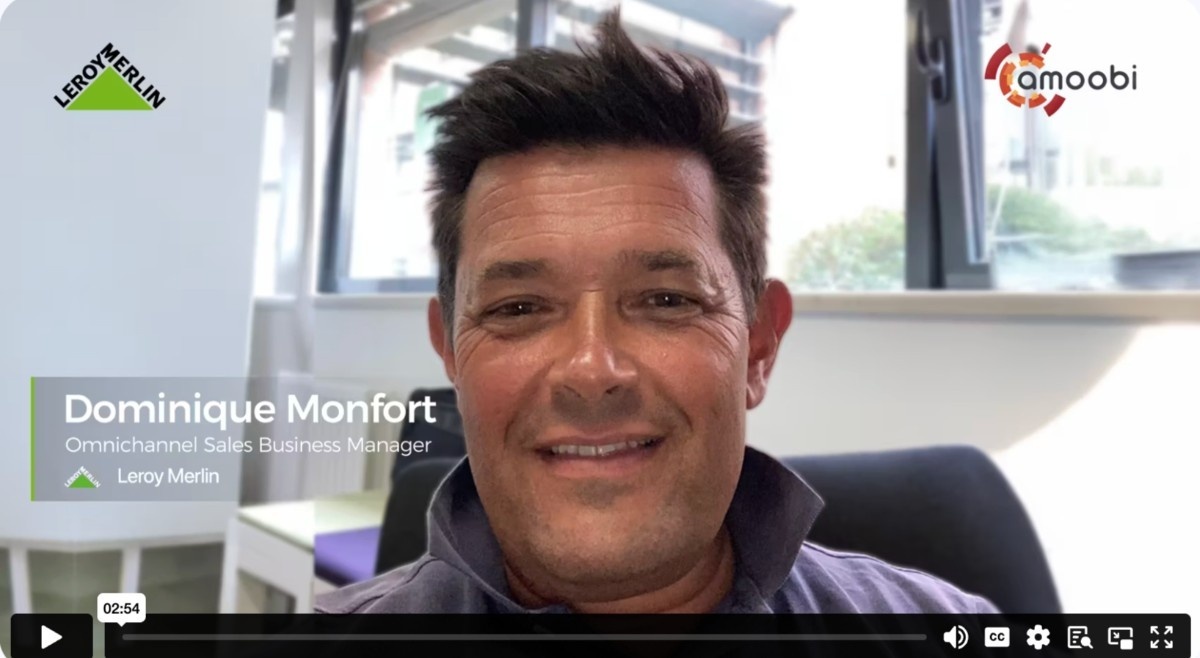
**Example:** Before partnering with **[SaaSpirin](https://www.saaspirin.co/)**, **[Amoobi,](https://www.saaspirin.co/work/amoobi-leroy-merlin)** a retail analytics platform, struggled to demonstrate how its in-store behavioral data delivered measurable ROI. Their text-based case studies lacked clarity and impact. **SaaSpirin** created a powerful video testimonial with their retail partner, Leroy Merlin, showcasing improved store layouts and shopper engagement. Used in email campaigns and sales presentations, the video boosted trust, strengthened Amoobi’s marketing, and accelerated B2B conversions.
**[Contact SaaSpirin today](https://www.saaspirin.co/contact)** to craft testimonial videos that build trust, demonstrate ROI, and drive real business growth!
### 3. Product Demos / Tutorials
Product demo or tutorial videos showcase how your product or service works in a practical, step-by-step way. Demos highlight key features, while tutorials guide users through specific tasks to ensure they understand how to use your solution effectively.
**Purpose:** Educate and demonstrate product value with practical walkthroughs.
**Best Length:** 2–5 minutes
**Where to Use:** Email nurture campaigns, product pages
**Example:** This demo video walks viewers through key features of the product dashboard, showing onboarding, navigation, and automated reporting in real time. As a clear product demo video, it highlights value by demonstrating how the tool saves time and enhances team efficiency. Embedded in email marketing sequences and placed on the product page, this video served as a great way to convert leads who were already aware of the brand but hesitant to buy.
### 4. Thought Leadership / Webinars
Thought leadership or webinar videos position your brand or experts as industry authorities. They often cover insights, trends, or best practices, and can include live or recorded presentations, panel discussions, or Q&A sessions.
**Purpose:** Build authority and share insights.
**Best Length:** 5–20 minutes
**Where to Use:** LinkedIn Live, YouTube, website
**Example:** The webinar video titled “Pricing B2B Software and SaaS Products for Global Success” features industry experts discussing revenue models, market adaptation, and regional pricing strategies. Presented during a key industry event and then distributed via the company’s LinkedIn and email channels, this piece of content bolstered the team’s broader video marketing efforts by attracting B2B decision‑makers and sparking meaningful engagement.
### 5. Animated / Motion Graphics Videos
Animated or motion graphics videos use visuals, illustrations, and dynamic animations to explain concepts, processes, or products. They are ideal for breaking down complex ideas in a visually engaging way without needing live-action footage.
**Purpose:** Explain data-heavy or abstract topics in a visual and easy-to-understand way.
**Best Length:** 1–2 minutes
**Where to Use:** Blog embeds, social posts
**Example:** This animated motion graphics video (available on YouTube) breaks down a complex concept into clear, engaging visuals and narration. As an animated / motion graphics video, it uses visual storytelling and clean design to simplify key ideas. Shared in blog posts and across social channels, it served as a great way to educate viewers at the awareness stage. By making abstract topics easy to understand, it enhanced the brand’s presence and supported its broader video marketing efforts.
## How Do B2B Videos Break the Traditional Mold? Real Campaign Examples That Connect
B2B video marketing doesn’t have to be stiff, overly corporate, or boring. When done creatively, it can grab attention, simplify complex ideas, and make your brand memorable. Let’s look at a few standout campaigns that broke the mold:
### 1. Dropbox – “My Shot + Your Illustration”
**Dropbox** combined Lin-Manuel Miranda’s music with user-generated illustrations to celebrate creativity and collaboration. The campaign transformed Dropbox from a simple file storage tool into a symbol of teamwork, resonating emotionally with users and increasing engagement.
### 2. SurveyMonkey – “Introducing the New SurveyMonkey”
This rebranding video of **SurveyMonkey** used sleek motion graphics with no narration, communicating innovation and confidence visually. By focusing on dynamic animation over corporate talk, SurveyMonkey positioned itself as a modern leader in insights and data solutions.
### 3. Snowflake – “BI vs. IT: The Struggle for Data Ends Now”
**Snowflake** brought humor and cinematic storytelling to dramatize the tension between BI and IT teams. The video clearly showed how its platform bridges the gap, turning complex enterprise messaging into an entertaining, relatable story.
### 4. Airtable – “Your All-in-One Production Kit”
Targeting creative teams, **Airtable** told real stories about production challenges and demonstrated how its software simplifies collaboration and project management. The campaign emphasized practical value while connecting with viewers on a human level.
These examples prove that effective B2B videos do more than list specs; they connect emotionally, clarify complex solutions, and express brand personality. Creativity isn’t just a bonus; it’s what makes your message stick and drives real business impact.
## What Tips Make B2B Marketing Videos More Engaging?
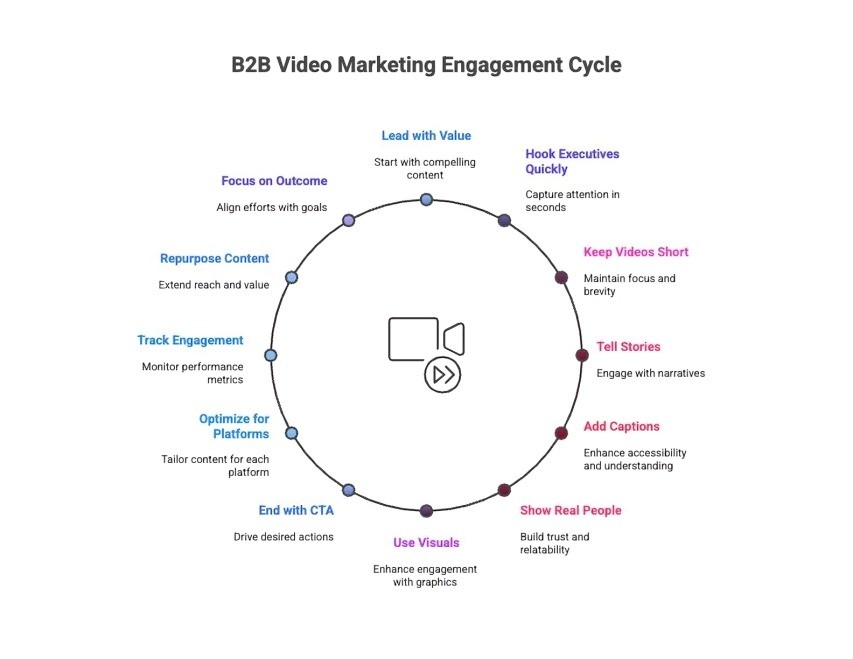
Now that you have a solid video strategy, it’s time to elevate your B2B video marketing with proven, modern tactics that get your product videos in front of the right people.
Here are some best practices that will help you create videos that capture attention, reach more decision-makers, and turn viewers into leads:
**1) Lead with Value:** Start with a problem or opportunity in the first 5–7 seconds. Show viewers what’s in it for them.
**2) Hook Busy Executives Quickly:** Capture attention fast. Skip long intros and get straight to a bold question, stat, or insight.
**3) Keep It Short and Focused:** Aim for under 2 minutes. Stick to one key message per video to hold attention.
**4) Tell Stories, Not Features:** Show real outcomes, not just product specs. Stories make complex ideas relatable.
**5) Add Captions and On-Screen Text:** Many watch videos muted. Captions improve accessibility and help viewers retain key points.
**6) Show Real People:** Include testimonials, founders, or behind-the-scenes clips. Real faces build trust.
**7) Use Motion Graphics and Visual Metaphors:** Visuals simplify complex workflows, SaaS features, or data insights. Keep them clear and engaging.
**8) End with a Strong Call-to-Action:** Guide viewers to the next step: demo, download, or trial. Make it direct and easy to follow.
**9) Optimize for Each Platform:** Resize, re-caption, or re-cut videos for LinkedIn, email, or TikTok while keeping your core message intact.
**10) Track Engagement and Improve:** Check analytics to see where viewers drop off. Adjust pacing, visuals, and content to boost retention.
**11) Repurpose Content:** Turn one webinar or demo into multiple short clips for social media, emails, and landing pages to reach more decision-makers.
**12) Focus on a Single Outcome:** Every video should have a clear goal; educate, inspire, or convert. Avoid cramming too many messages.
## What Are the Most Common B2B Video Marketing Mistakes and How Can You Avoid Them?
## 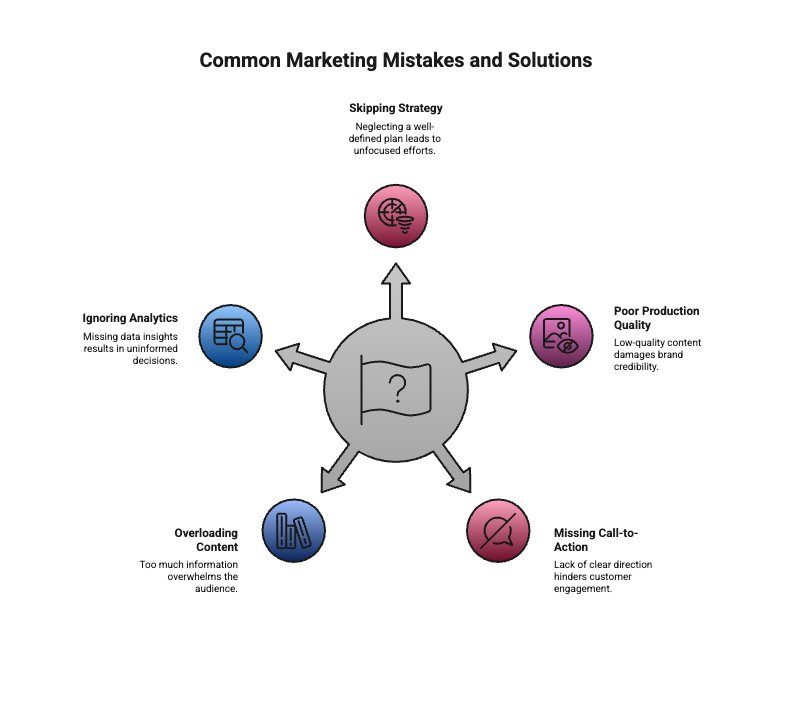
Even experienced marketers can stumble with B2B videos. Most mistakes come from rushing, poor production, or missing calls-to-action. Here are some of the most common pitfalls and how to avoid them:
- **Skipping Strategy:** Jumping straight into production without clear goals or understanding your audience leads to videos that look good but don’t perform. Define objectives, know your audience’s pain points, and align every video with your marketing plan.
- **Poor Production Quality:** Shaky visuals, bad lighting, or unclear audio can make even great content feel unprofessional. Invest in proper equipment or hire experts, and always review before publishing.
- **Missing a Call-to-Action:** Viewers need direction. Without a clear next step, like booking a demo or downloading a guide, your video may entertain, but won’t generate leads.
- **Overloading Content:** Trying to say too much confuses viewers. Focus on one key message per video to keep it memorable and actionable.
- **Ignoring Analytics:** Not checking engagement or drop-off rates means missed opportunities to improve. Track viewer behavior and adjust pacing, visuals, or messaging accordingly.
## Elevate Your B2B Video Marketing with SaaSpirin
Struggling to turn engagement into real sales growth? At **SaaSpirin**, we help B2B and SaaS brands turn genuine customer success stories into powerful video case studies that build trust, shorten sales cycles, and drive measurable results.
Our team captures authentic customer experiences and transforms them into case studies and videos that show real outcomes, spark confidence, and help your audience see why your solution works.
From discovery to delivery, everything we create is done-for-you: strategic, data-informed, and built to convert. With **SaaSpirin**, you don’t just get more content; you get stories that sell.
Ready to turn your happiest customers into your strongest growth engine?
**[Book a discovery call today](https://www.saaspirin.co/contact)** and see how **SaaSpirin** can help you turn trust into traction, one story at a time.
## Final Thoughts: Maximizing Impact with Video in B2B Marketing
B2B video marketing is transforming how companies connect, communicate, and convert, especially with CEOs and other decision-makers. When executed strategically, it does more than tell your story; it drives measurable business results. By combining creativity with clear messaging, consistency, and data-driven insights, your videos can educate, inspire, and influence your audience.
Focus on delivering authentic, valuable content, and your message will reach the right people at the right time, turning every view into an opportunity to build trust, engagement, and growth.
## Frequently Asked Questions
### How to use video content in B2B SaaS marketing strategy?
Define clear goals, understand your target audience, choose the right video formats, and plan distribution across channels that reach decision-makers.
### How does short-form video impact B2B marketing effectiveness?
Short-form videos grab attention quickly, boost engagement, and make complex ideas easier to digest, especially for busy executives.
### What are some ways to use video in B2B lead generation?
Use product demos, webinars, case studies, and gated video content to educate prospects and capture contact information.
### What types of content are the best for B2B marketing?
Explainer videos, customer testimonials, product demos, thought leadership, and short-form social clips perform best across the buyer’s journey.
### How can you use video in your marketing campaigns?
Incorporate videos in emails, landing pages, social posts, and ads to educate, engage, and drive conversions.
### What better way to attract potential customers than to show them everything your product has to offer?
Showcase product features and benefits through demos, tutorials, or interactive videos to give prospects a clear, compelling view of your value.
### What is the best length for B2B marketing video?
Most B2B marketing videos perform best between 1–3 minutes for short-form content and 5–20 minutes for webinars or in-depth demos, depending on the audience and purpose.
### What is the role of video content in B2B inbound marketing?
Video content attracts, educates, and nurtures leads by simplifying complex ideas, increasing engagement, and guiding prospects through the buyer’s journey.
### How testimonial videos are used in B2B marketing?
Testimonial videos build trust and credibility by showing real customers sharing measurable results and success stories, helping prospects see the value of your solution.
Topics: [B2B](https://www.saaspirin.co/blog/tag/b2b)
Share this
[Share on X](https://x.com/intent/post?url=https://www.saaspirin.co/blog/b2b-video-marketing&text=How+Can+B2B+Video+Marketing+Boost+Sales+in+2026%3F) [Share on Facebook](https://www.facebook.com/sharer/sharer.php?u=https://www.saaspirin.co/blog/b2b-video-marketing&t=How+Can+B2B+Video+Marketing+Boost+Sales+in+2026%3F) [Share on LinkedIn](https://www.linkedin.com/shareArticle?mini=true&url=https://www.saaspirin.co/blog/b2b-video-marketing&t=How+Can+B2B+Video+Marketing+Boost+Sales+in+2026%3F)
Previous blog post
[← What’s the Smartest Way for B2B Brands to Create Case Studies?](https://www.saaspirin.co/blog/top-agencies-for-compelling-b2b-case-studies)
Next blog post
[What Are Consumer Insights and How Do They Drive Growth? →](https://www.saaspirin.co/blog/consumer-insights)
## You May Also Like
These Related Stories
[How Can B2B Video Production Boost Your Brand’s Visibility?](https://www.saaspirin.co/blog/b2b-video-production)

[B2B](https://www.saaspirin.co/blog/tag/b2b)
### How Can B2B Video Production Boost Your Brand’s Visibility?
January 28, 2026 12 min read
[What Are Some Advanced Strategies for Using Case Studies to Reduce Decision Time in B2B Sales?](https://www.saaspirin.co/blog/what-are-some-advanced-strategies-for-using-case-studies-to-reduce-decision-time-in-b2b-sales)
[Case studies](https://www.saaspirin.co/blog/tag/case-studies)
### What Are Some Advanced Strategies for Using Case Studies to Reduce Decision Time in B2B Sales?
January 30, 2026 12 min read
[Is Your B2B Lead Conversion Rate Good Enough?](https://www.saaspirin.co/blog/b2b-lead-conversion)
[B2B](https://www.saaspirin.co/blog/tag/b2b)
### Is Your B2B Lead Conversion Rate Good Enough?
September 23, 2025 14 min read
[](https://www.saaspirin.co)
Join our newsletter and get valuable, data-driven insights on growing your B2B company with impactful customer storytelling.
Quick Links
- [Our TRUST™ Framework](https://www.saaspirin.co/trust)
- [Terms & Conditions](https://www.saaspirin.co/terms-and-conditions)
- [Client SLA](https://www.saaspirin.co/hubfs/SaaSpirin%20remote%20testimonial%20-%20Client%20SLA%20(20250501).pdf)
Quick Links
- [Cookie Policy](https://www.saaspirin.co/cookies)
- [Privacy Policy](https://www.saaspirin.co/privacy)
```json
{
"@context" : "https://schema.org",
"@type" : "BlogPosting",
"author" : {
"@type" : "Person",
"name" : "Nicolas Jacobeus",
"url" : "https://www.saaspirin.co/blog/author/nicolas-jacobeus"
},
"dateModified" : "2026-04-08T05:20:22.315Z",
"datePublished" : "2026-04-08T05:20:22.000Z",
"headline" : "How Can B2B Video Marketing Boost Sales in 2026?",
"mainEntityOfPage" : {
"@id" : "https://www.saaspirin.co/blog/b2b-video-marketing",
"@type" : "WebPage"
},
"publisher" : {
"@type" : "Organization",
"logo" : {
"@type" : "ImageObject",
"url" : "https://www.saaspirin.co/hubfs/60f53827d73fc9446c9a0ac4_saaspirin.png"
}
}
}
```