By Nicolas Jacobeus on January 16, 2026
.png)
Key Highlights
-
As a stepping stone for a successful marketing strategy, testimonials play a crucial role in building trust and credibility with your audience.
-
They provide powerful social proof, guiding potential customers by showing that others have had positive experiences with your brand.
-
By addressing common concerns and validating your marketing claims with real-world results, testimonials help overcome buyer hesitation, a key goal in any strategy.
-
Sharing authentic customer stories helps humanize your brand and forges a stronger emotional connection with your target audience.
-
By directly contributing to higher conversion rates and increased sales, effective testimonials ultimately strengthen your business.
Would you trust a brand just because it says it’s great? No right! Today’s customers are more informed and skeptical than ever before. They don’t take a business’s word at face value; they demand proof. That proof often comes from customer reviews and testimonials. With so much reliance on real peer experiences, one thing is clear: brands must earn trust through authenticity, not just advertising.
So, what is the goal of a testimonial? Simply put, it bridges the trust gap between your brand and your audience. Testimonials aren’t just compliments; they are strategic tools that validate your promises, address doubts, and build an emotional connection with potential buyers.
In this blog, we'll explore the power of testimonials and how they can grow your business. We'll break down the key goals and help you learn why advertisers rely on testimonials and how to transform satisfied customers into your strongest advocates.
What Is a Testimonial in Marketing?
A testimonial in marketing is a customer’s firsthand account describing their experience with a product or service. It reflects the customer’s own words and perspective, offering an authentic description of how the solution performed in real use.
Testimonials may appear in written quotes, recorded video, statements, or more detailed case study narratives, each format presenting the customer story with a different level of depth, structure, and context. Together, these forms provide marketers with credible, experience-based material drawn directly from actual users.
What are the Different Types of Client Testimonials and Their Benefits?
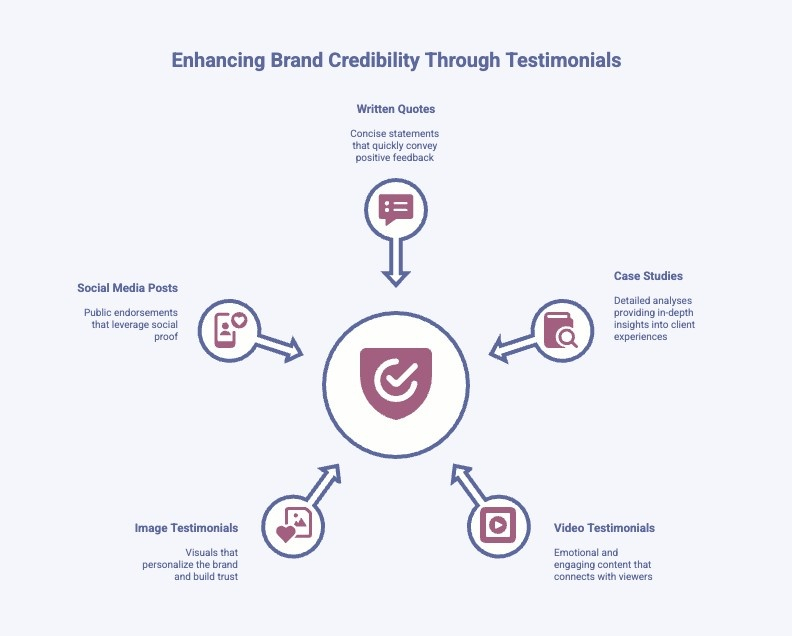
Testimonials come in many forms, short quotes, detailed stories, and even videos, and each plays a unique role. Choosing the right type allows you to build trust, highlight real-world outcomes, and move customers confidently toward taking action.
-
Written Quotes for Quick Impact: Short, punchy quotes are easy to scan, perfect for blog posts, landing pages, or marketing materials.
-
Case Studies for In-Depth Insights: Detailed accounts of real-world problems solved by your product provide context, showcase results, and differentiate your offering from similar products.
-
Video Testimonials for Emotional Connection: Videos bring stories to life, letting real customers share their experiences. These are a great way to show potential clients authentic feedback. See Video Testimonial Script Examples for inspiration.
-
Image Testimonials to Personalize Your Brand: Pairing photos with quotes adds authenticity, helping new businesses gain trust quickly.
-
Social Media Posts and Online Reviews for Social Proof: Sharing testimonials on review sites and social media platforms leverages the actions of others to influence potential clients.
What is the Goal of a Testimonial?
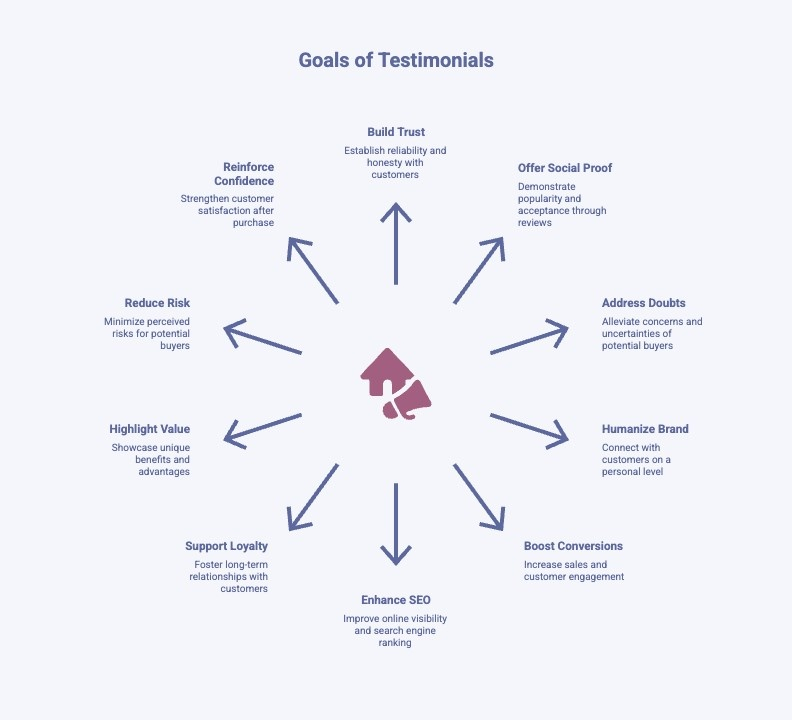
Testimonials do more than showcase happy customers; they serve a strategic purpose in your marketing. From building credibility to reducing buyer hesitation, each testimonial plays a part in moving prospects closer to conversion.
Let’s explore the key goals that make testimonials such powerful trust-building tools:
1. Build Trust and Credibility
Testimonials transform your claims into real, credible proof, helping prospects believe that your promises hold up in practice. They reduce skepticism by showing that real customers have already achieved the outcomes you’re promising, which makes your message far more convincing than abstract marketing statements alone.
For instance, Slack's customer stories highlight how companies like Razorpay have “delivered faster customer responses” after adopting the platform. When prospects see another business improving communication and productivity through your tool, it reassures them that you genuinely deliver measurable value.
2. Offer Social Proof
People naturally look to others like them when making decisions, especially when evaluating a new product or solution. Testimonials provide this social proof by showing that real customers with similar challenges have already succeeded, which reduces uncertainty and builds confidence.
For example, sharing a case study about a small business that used your software to generate 30% more leads helps new prospects see a clear path forward. It creates the reassuring mindset of “if they could achieve this, then I can too,” making conversion far more likely.
3. Address Buyer Doubts
Prospects often hesitate because they’re unsure whether your solution will work for them or whether making the switch is worth the risk. Testimonials help remove these doubts by showing that real customers once had the same concerns, and succeeded anyway. Hearing someone say, “I tried it and it worked for us,” is far more reassuring than any claim a brand can make.
For example, a customer video stating, “We were worried about switching platforms, but the team handled the migration with zero downtime,” directly calms that common fear.
4. Humanize Your Brand
Beyond features and technical details, testimonials bring real people and real emotions into your brand story. They show that behind your product is a team that listens, supports, and genuinely cares about customer success. This human element makes your brand feel approachable rather than distant or overly corporate.
For example, a written quote paired with a customer photo saying, “I felt like the support team truly cared. They treated us like people, not tickets,” instantly creates warmth and relatability for prospects.
5. Boost Conversions
When placed at the right moment, on a product page, checkout screen, or landing page, testimonials can provide the final push a prospect needs to take action. They reinforce that others have already succeeded, reducing hesitation at critical decision points. By showing real outcomes at moments of high intent, testimonials create the reassurance buyers often need to move forward with confidence.
For example, ending a free-trial signup flow with a quote like “After switching, we reduced costs by 40%” can convince someone on the fence to click Get Started.
6. Enhance SEO and Online Reputation
Fresh testimonials contribute to stronger online visibility by adding unique, regularly updated content that search engines reward. Customer stories often include natural keywords prospects already search for, which helps improve rankings and relevance. Beyond SEO, testimonials also shape your brand’s reputation across review platforms and social channels.
When credible voices consistently praise your product, it strengthens trust for anyone researching your company. Gartner frequently highlights how social proof, including customer testimonials, plays a critical role in influencing purchasing decisions and elevating a brand’s overall online authority.
7. Support Long‑Term Loyalty
Testimonials not only attract new customers, but they also reinforce trust and satisfaction among existing ones. When users see stories from people who have stayed with your product for years, it validates their own choice and deepens their sense of belonging. Featuring customers publicly also makes them feel valued, which strengthens emotional loyalty and increases the likelihood of advocacy.
For example, showcasing a long-term user saying, “Five years in and still getting value,” reminds others of their ongoing benefits and encourages them to continue investing in the relationship.
8. Highlight Unique Value Propositions
Testimonials can spotlight specific strengths or advantages your product offers, especially ones prospects might overlook when skimming features. While feature lists show what your product does, customer stories show why those features matter in real life.
When someone says, “No other tool automated our workflow this seamlessly,” it communicates a differentiator more convincingly than branding alone. Prospects quickly grasp what makes your solution stand out, and because the message comes from another user rather than your marketing team, your value proposition becomes more credible and memorable.
9. Reduce Perceived Risk
Any investment, financial, time-based, or operational, comes with risk in the buyer’s mind. Testimonials help reduce this perceived risk by demonstrating that others have taken the leap and achieved safe, positive outcomes.
When customers share experiences like “We implemented it in under 48 hours with no disruption,” it reframes the purchase from risky to reliable. This reassurance is especially impactful for prospects purchasing software for the first time or switching from a long-time vendor. By reducing their sense of vulnerability, testimonials pave the way for faster, more confident decisions.
10. Reinforce Post-Purchase Confidence
Testimonials aren’t just for acquisition; they also help current customers feel validated in their decision. Seeing others succeed after adopting your solution creates a sense of belonging and reinforces that they made the right choice. This boosts satisfaction, reduces post-purchase anxiety, and encourages deeper product usage.
For example, reading that another customer scaled smoothly from 10 to 200 users builds confidence that their own growth can be supported too. Strong post-purchase reassurance ultimately drives retention, advocacy, and long-term customer loyalty, often more valuable than the initial sale.
What are the Best Practices for Collecting and Showcasing Testimonials?
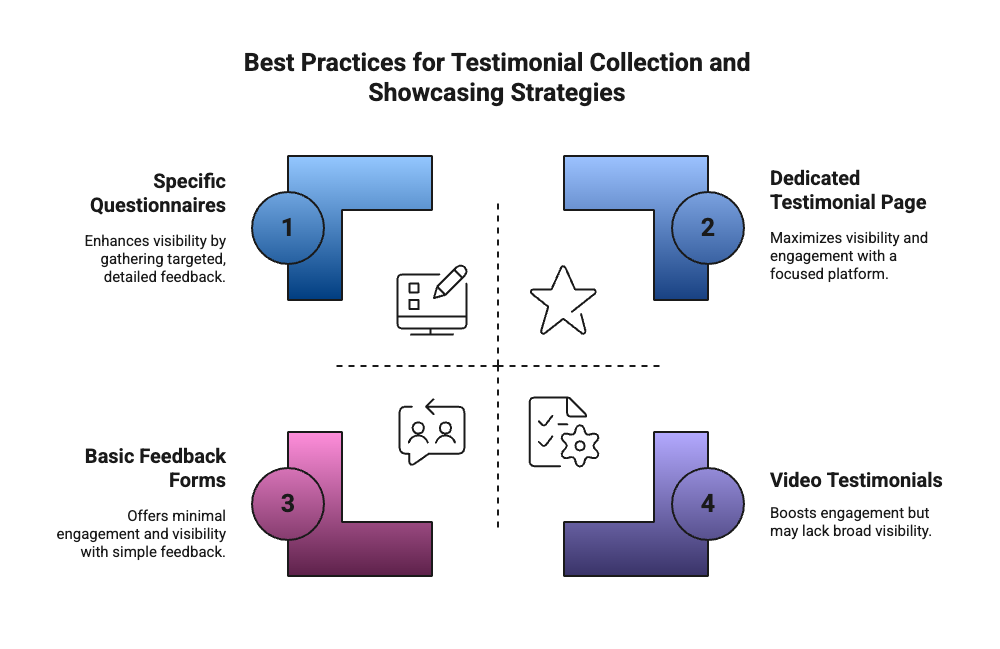
Testimonials have the biggest impact when you’re intentional about how you collect and share them. A thoughtful strategy ensures the feedback you gather is authentic, relevant, and positioned to build trust with prospects. In fact, Trustmary's research shows that reviews consistently boost conversion rates, making a structured approach essential rather than optional.
-
Ask Specific Questions to Capture Valuable Customer Feedback: Focus on measurable outcomes, pain points solved, and benefits experienced.
-
Encourage Video and Image Testimonials for Higher Engagement: Video testimonials and photos make content more relatable and shareable across social media platforms.
-
Create a Dedicated Testimonial Page for Maximum Visibility: A centralized page boosts credibility, improves search engine optimization, and makes it easier for prospective customers to find customer feedback.
-
Respond to Negative Feedback Professionally: Acknowledging and addressing negative feedback builds trust and shows commitment to excellent customer service.
What Common Mistakes Do Businesses Make With Testimonials?
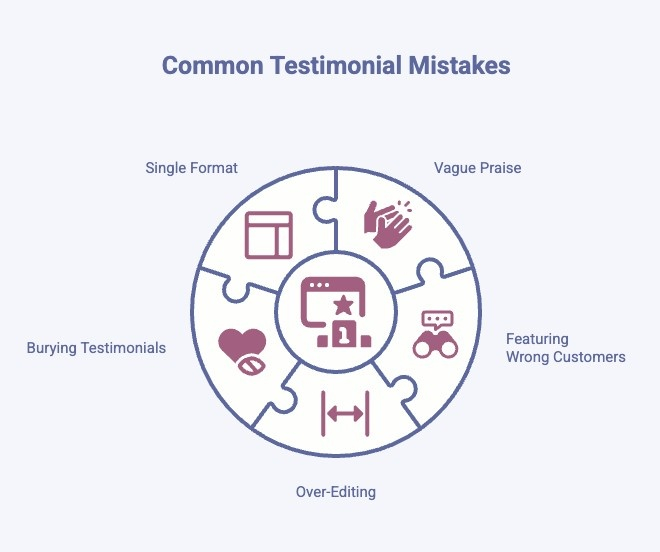
Before diving in, it’s important to understand why some testimonials fail to influence buyers, even when they seem positive. Often, it’s not the lack of happy customers but the way their words are collected, framed, or showcased. Here are the most common pitfalls to avoid if you want your testimonials to genuinely drive conversions:
-
Using vague, generic praise: Testimonials like “Great product!” or “Excellent service!” don’t provide real insight. Buyers need specifics, measurable outcomes, clear before-and-after improvements, or concrete benefits. Without details, testimonials lose credibility and persuasive power.
-
Featuring the wrong customers: Highlighting customers who don’t match your target audience weakens the impact. Testimonials work best when prospects see someone with similar challenges, industry context, or business size. Relevance drives trust.
-
Over-editing until they sound scripted: Polishing is good, but rewriting too heavily makes testimonials feel artificial. Authentic tone, voice, and imperfections build trust. Forced corporate language erodes it.
-
Burying testimonials where no one sees them: Many companies hide testimonials on a single page instead of placing them strategically on landing pages, pricing pages, product pages, or during checkout, where buyer hesitation peaks.
-
Using only one format: Relying solely on text limits impact. Video clips, quotes, case studies, and social proof visuals help different buyers connect in different ways.
Turn Customer Stories into Growth with SaaSpirin
At SaaSpirin, we help B2B and SaaS companies turn real customer experiences into high-impact proof assets that build trust and drive conversions. Instead of scattered quotes or inconsistent case studies, we provide a complete done-for-you system, handling outreach, interviews, approvals, writing, editing, and producing multi-format assets.
Every deliverable is created for practical use across your website, campaigns, and sales workflows, giving your team proof they can apply immediately. And because we specialize in B2B and SaaS, we understand the outcomes your buyers care about and the objections that slow deals. We turn customer insights into credible, persuasive stories that highlight real results, address concerns, and support revenue teams at every stage of the funnel.
The result is a growing library of proof assets your marketing and sales teams can rely on to move prospects from interest to conviction.
Ready to turn customer proof into consistent growth? Contact SaaSpirin today.
Final Thoughts
Leveraging customer testimonials is a powerful way to build trust, showcase real results, and humanize your brand. By sharing authentic testimonials across social media platforms, review sites, and dedicated testimonial pages, businesses can influence prospective customers, boost conversions, and strengthen their brand reputation.
The benefits of testimonials go beyond marketing; they help validate your customer service, highlight positive experiences, and differentiate your offering from similar products. Whether you use written quotes, video stories, or case studies, each piece of feedback can play a key role in growing your business.
For B2B and SaaS brands, integrating testimonial content strategically into marketing campaigns is a great way to maximize trust and drive long-term business growth.
Frequently Asked Questions
What are the main benefits of using testimonials for a business?
The benefits of customer testimonials include increased credibility, stronger social proof, reduced buyer doubts, improved brand relatability, and higher conversions, helping businesses attract trust, influence decisions, and support long-term customer loyalty across marketing and sales channels.
How do testimonials help increase trust with potential customers?
Testimonials increase trust by sharing real customer experiences that validate your product’s claims and reduce doubts. They show relatable success stories, proving others achieved results, demonstrating how to use testimonials to grow a business through credibility and authenticity.
How can leveraging testimonials improve marketing results?
Testimonials strengthen marketing by adding real proof, making messages more persuasive, and helping prospects visualize success. They clarify value, support key claims, and enhance engagement, illustrating why do advertisers use testimonials to boost relevance, trust, and campaign effectiveness.
What impact do testimonials have on conversion rates?
Testimonials improve conversion rates by easing doubts, validating promises, and highlighting real outcomes. When prospects see proof from similar users, hesitation drops and confidence rises, motivating them to complete purchases and move forward with your product or service.
How can I maximize the effectiveness of testimonials on my site?
Place testimonials on high-intent pages, include names and specifics, use varied formats, and position them near CTAs. This reinforces trust at key moments, reduces friction, and encourages users to engage, explore deeper, and convert confidently.
How can video testimonials be optimized for better engagement?
Keep testimonials concise, highlight genuine stories, use captions, present measurable results, and place videos on landing pages or social feeds. This increases visibility, emotional impact, and clarity, making them easier to watch, trust, and act on.
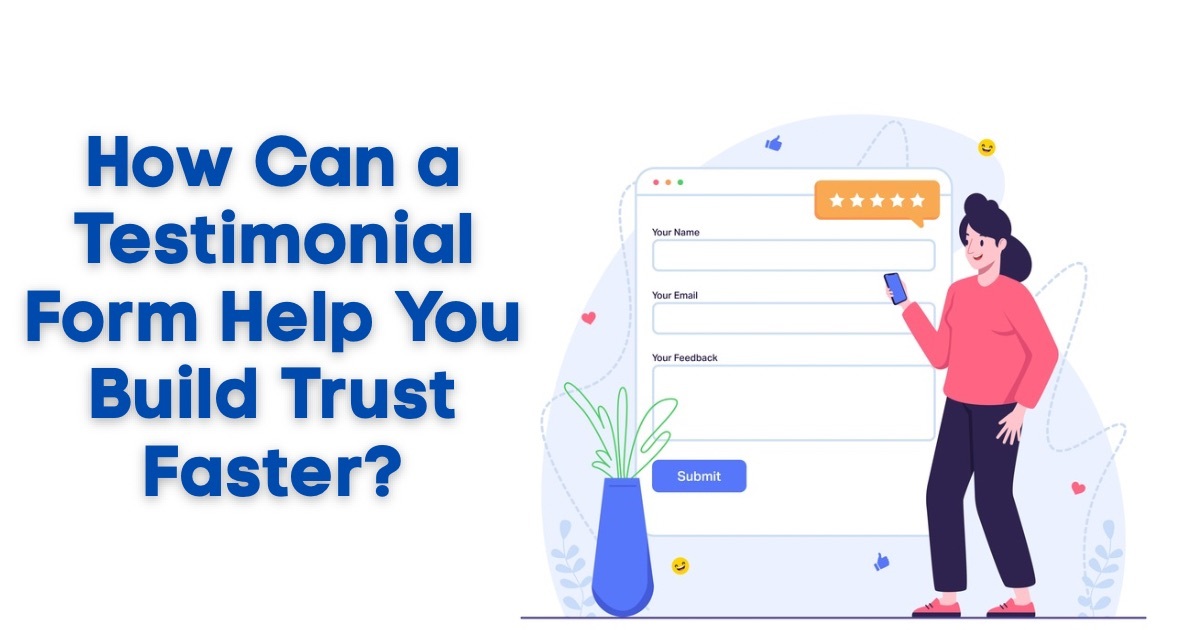
How Can a Testimonial Form Help You Build Trust Faster?

Testimonial Hero vs SaaSpirin: Which One Delivers More?