By Nicolas Jacobeus on January 29, 2026

Key Highlights
- Product testimonials are a powerful tool for building trust and credibility with potential customers.
- Authentic and transparent customer reviews provide insights that influence purchasing decisions.
- Video testimonials often have a stronger emotional impact and increase trustworthiness.
- Consistent and specific testimonials enhance the reliability of your product’s value over time.
- Showcasing real people’s experiences creates social proof, influencing prospective buyers.
- Best practices for collecting testimonials include asking for honest feedback and displaying them effectively.
- Properly leveraging customer success stories across social media platforms and emails increases visibility and engagement.
- Using a service like SaaSpirin helps businesses collect high-quality, professional testimonials with ease.
Getting someone to trust your product is often the hardest part of the buying journey. When buyers are comparing multiple options, polished marketing claims rarely settle their doubts, leaving businesses struggling to stand out and earn credibility.
The problem is clear: people tend to trust the opinions of others more than brand messaging. While your marketing can highlight features, it’s the product testimonials from real customers that truly establish trust and influence purchasing decisions.
This blog will dive into why product testimonials are so reliable, how to collect and showcase them effectively, and how they can become a key part of your marketing strategy. By the end, you'll know how to turn customer success stories into a powerful tool that helps build trust and boost conversions.
What Are Product Testimonials?
Product testimonials are statements or reviews from customers who share their experiences with a product or service. These testimonials typically highlight the benefits and results that customers have gained, helping to build trust and credibility for the brand.
Well-known B2B and SaaS companies like HubSpot and Slack prominently use customer testimonials on their websites and product pages to show how real customers solve real problems using their products. Whether written, video-based, or shared on social channels, testimonials help prospective customers understand how a product performs and whether it fits their needs.
Why Are Product Testimonials Very Reliable?
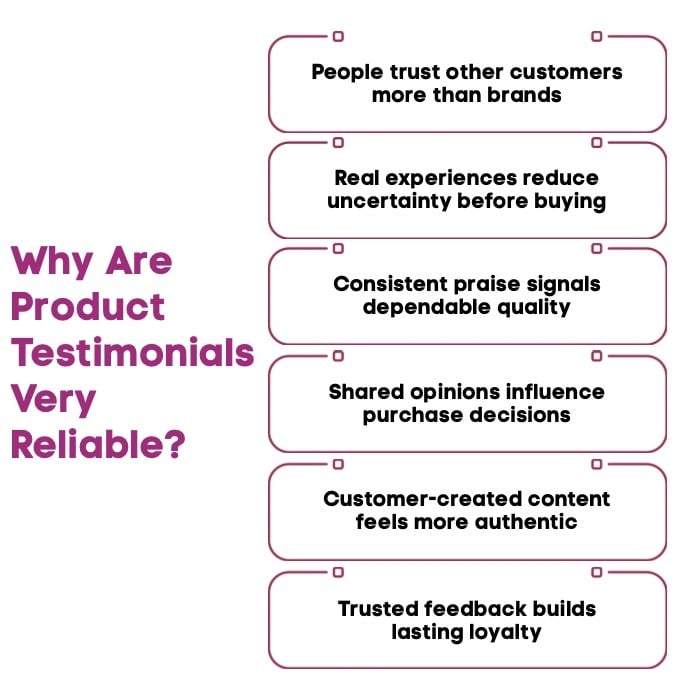
Product testimonials are a powerful tool in building trust and influencing purchasing decisions. When prospective customers evaluate a product or service, they often rely on authentic testimonials from real people who have already experienced the benefits. Let’s break down the key reasons why product testimonials are so reliable.
1. Building Authenticity and Trustworthiness
Customer testimonials feel trustworthy because they come directly from real users, not brand messaging. When people describe their positive experiences in their own words, it signals honesty and credibility. This peer-driven perspective makes testimonials easier to trust than promotional claims.
2. Providing Clarity Through Real Customer Context
Product testimonials add value by setting clear expectations. Instead of abstract promises, they explain how a product is used, what problems it solves, and what results customers actually see. This practical context helps reduce uncertainty and allows buyers to make more informed decisions.
If collecting authentic testimonials feels time-consuming, SaaSpirin offers a done-for-you service that streamlines the process and delivers high-quality customer success stories.
3. Demonstrating Consistency and Reliability Over Time
Consistently collecting customer testimonials builds a track record of reliability. Multiple positive reviews from different customers give prospective customers confidence in the product’s ability to deliver results. This consistency reinforces the brand’s reliability and shows that the product meets the expectations of its target audience.
4. Acting as Social Proof to Influence Purchases
Social proof plays a major role in the effectiveness of testimonials. When potential buyers see positive feedback from others, they are more likely to trust the product. Social media platforms and product pages filled with client testimonials and positive reviews create a sense of trust and increase the likelihood of purchase.
5. Enhancing Reliability with User-Generated Content
User-generated content, such as customer feedback and testimonial videos, enhances the reliability of product testimonials. This type of content comes directly from the customer, adding a layer of authenticity that marketing materials cannot replicate. It showcases real experiences from real people, making it more relatable for potential customers.
6. Building Long-Term Customer Loyalty
Product testimonials don’t just influence first-time purchases, they also reinforce trust after the sale. When customers see stories that reflect their own experiences, it reassures them that they made the right decision. This validation strengthens confidence in the brand, making customers more likely to stay engaged, continue using the product, and recommend it to others.
Product testimonials do more than build trust and drive conversions. When used intentionally, they become a strategic asset that helps brands reduce buyer hesitation, reinforce credibility, and build lasting customer relationships.
What Are the Best Practices for Collecting and Showcasing Product Testimonials?
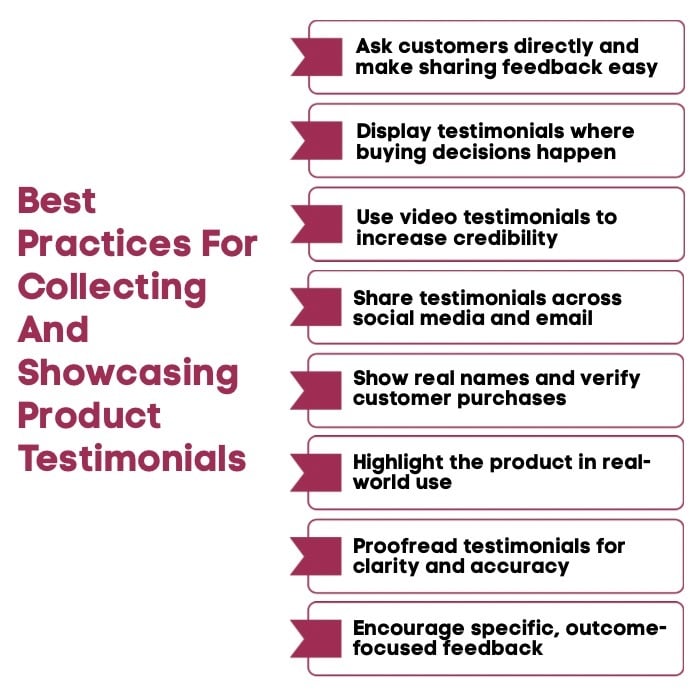
Collecting and showcasing product testimonials effectively can boost credibility and influence purchasing decisions. Here are the best practices for ensuring your testimonials have maximum impact.
1. Asking for and Incentivizing Testimonials
Requesting testimonials from satisfied customers can be made easier by simply asking them for feedback. Offering small incentives, like discounts or exclusive offers, can encourage participation without compromising the authenticity of the testimonial. Be sure to emphasize that honest feedback is appreciated, regardless of whether it’s positive or critical.
Looking for a hassle-free way to collect and produce polished testimonials? SaaSpirin offers a streamlined service that handles everything from outreach to content creation.
2. Displaying and Curating Testimonials Effectively
Once you've collected testimonials, displaying them prominently on your product pages and marketing materials is essential. Curate the best testimonials to highlight different aspects of the product and showcase a variety of customer experiences. This helps provide a well-rounded view of how your product meets the needs of different users.
3. Using Video Testimonials
Video testimonials are particularly effective in building trust and engagement. They allow prospective customers to see and hear directly from real people, making the testimonial feel more genuine and relatable. These videos can be shared across social media platforms, websites, and email campaigns for greater reach.
4. Leveraging Testimonials on Social Media and Email
Utilize testimonials across multiple channels to increase visibility. Share snippets on social media posts and incorporate them into email campaigns. By doing this, you reach a wider audience and reinforce your brand message across touchpoints where potential clients are most active.
5. Including Respondent Names and Verifying Purchases
Including a customer’s name and verifying their purchase can significantly increase the credibility of a testimonial. Customers are more likely to trust feedback from individuals who appear authentic. When possible, link the testimonial to a verified purchase or account, adding a layer of transparency.
6. Showcasing the Product in Use
Showcasing the product in use within testimonials, whether through video testimonials or photos, provides specific details about how the product works. This helps potential customers visualize the product in their own lives and better understand its benefits.
7. Proofreading Testimonials
Before publishing, always proofread testimonials for grammar, clarity, and accuracy. While testimonials are user-generated content, they should still be polished for professional presentation. Ensuring that testimonials are clear and error-free enhances their credibility and makes them easier for prospective customers to read.
8. Providing Detailed Feedback
Encourage customers to provide detailed feedback that includes specific outcomes or benefits they experienced. The more specific details a testimonial includes, the more valuable it becomes to potential buyers who want to understand the real impact of the product.
Collecting and showcasing product testimonials effectively can significantly enhance credibility, build trust, and ultimately drive conversions by providing prospective customers with authentic, relatable feedback.
Are Video Testimonials More Reliable Than Written Ones?
Video testimonials often carry more weight than written ones due to their personal and visual nature. Seeing and hearing a customer speak about their experience creates a stronger emotional connection and adds authenticity, making it easier for potential customers to trust the feedback. Video testimonials also allow for non-verbal cues, like facial expressions and tone of voice, which can enhance the perceived sincerity of the testimonial.
While written testimonials offer value they still come with a few drawbacks like:
- Lack of emotional engagement compared to video.
- No visual or vocal cues to enhance authenticity.
- Can be seen as less personal or relatable.
- May be easier to fabricate or modify.
Both formats are effective, but video testimonials tend to be more engaging and impactful for building trust.
How Can SaaSpirin Help You Leverage Reliable Customer Testimonials?
Product testimonials are key to building trust and boosting conversions. But creating authentic, polished testimonials can be time-consuming. That’s where SaaSpirin comes in.
We specialize in providing done-for-you customer success stories, offering:
- Professional Video and Written Testimonials: From outreach and interviews to final production, we deliver polished, ready-to-use content.
- Multi-Format Content: Whether it's videos, case studies, or social media clips, we provide testimonials in various formats for seamless distribution.
- Authenticity and Transparency: We ensure the stories are genuine and resonate with your audience, helping you build trust.
- Scalable and Hassle-Free: Our end-to-end service simplifies the process, allowing you to focus on growing your business.
Partner with us at SaaSpirin and turn customer success into a powerful marketing tool that drives trust and conversions.
Ready to elevate your customer success stories? Book a discovery call with us today to learn how we can help you create authentic, high-impact testimonials that drive results!
Final Thoughts
Product testimonials are a powerful tool in building trust, influencing purchasing decisions, and fostering long-term customer loyalty. Whether through written feedback or engaging video testimonials, showcasing authentic customer experiences can greatly enhance your brand’s credibility.
So, are product testimonials very reliable, true or false? The answer is clear: when gathered and presented correctly, they provide genuine, trustworthy insights that can significantly influence potential customers and strengthen relationships with your target audience. Ultimately, product testimonials not only validate your product’s value but also serve as a key driver in growing your business.
Frequently Asked Questions
Are testimonials good for SEO?
Yes, product testimonials can improve SEO by increasing content relevance and engagement. When posted on product pages or blogs, they contribute fresh, keyword-rich content that can help improve rankings on search engines.
Can you trust good reviews?
Generally, good reviews are trustworthy, but it’s important to evaluate the authenticity of the source. Genuine reviews reflect real customer experiences, while fake reviews may not be reliable and can mislead potential buyers.
Are product testimonials reliable?
Product testimonials are reliable when they are authentic, specific, and verified. Testimonials from real customers provide valuable insights, but ensuring transparency and accuracy is key to their trustworthiness.
How can I tell if a product testimonial is trustworthy?
Look for details like the customer’s full name, specific product benefits, and realistic outcomes. Trustworthy testimonials typically avoid generic statements and are backed by verifiable experiences from real users.
What are the main factors that make a product testimonial reliable?
The main factors include authenticity, specificity, and transparency. A reliable testimonial provides clear, detailed feedback from actual customers and avoids exaggeration or vague statements about the product’s benefits.
How do companies collect reliable product testimonials?
Companies collect reliable testimonials by reaching out to satisfied customers, ensuring consent, and verifying their experiences. Using follow-up surveys, structured interviews, or feedback requests helps gather genuine, insightful testimonials.
Can fake testimonials impact the perceived reliability of real ones?
Yes, fake testimonials can undermine the perceived reliability of real ones. If customers suspect inauthenticity, they may become skeptical of all testimonials, diminishing their effectiveness in influencing purchasing decisions.
How do reliable testimonials help build trust with potential customers?
Reliable testimonials build trust by providing real-world evidence of the product’s value. When potential customers see genuine feedback from satisfied buyers, it reassures them about the product’s effectiveness and reliability.
What signs indicate that a testimonial might be unreliable?
Signs of an unreliable testimonial include vague language, generic claims, and lack of specific details. Also, testimonials without customer names or faces may suggest they are not authentic, diminishing their credibility.
Do user experience experts trust product testimonials on websites?
User experience experts generally trust product testimonials if they are clear, authentic, and backed by evidence. Testimonials that provide specific, honest feedback are viewed as valuable tools in assessing a product's usability and effectiveness.

Inspiring Client Testimonials Examples: 5 Powerful Cases

How Can You Craft the Perfect Email Testimonial?