By Nicolas Jacobeus on April 6, 2026

Key Highlights
- Word of mouth marketing builds trust faster than paid ads because recommendations feel authentic and unbiased.
- Referral-driven leads convert at higher rates and reduce customer acquisition costs over time.
- Positive reviews and testimonials strengthen brand credibility and long-term reputation.
- Digital platforms amplify conversations, turning private recommendations into scalable social proof.
- Exceptional customer experience and well-timed review requests fuel consistent advocacy.
- For SaaS and B2B brands, trusted recommendations accelerate sales cycles and influence high-value decisions.
In a world dominated by paid ads and automation, one strategy continues to outperform the rest: word of mouth marketing. While platforms and algorithms change constantly, genuine recommendations between people remain incredibly powerful. According to Forbes, People trust earned media (like recommendations) 24 times more than traditional advertising.
But what makes it so effective? The benefits of word-of-mouth marketing go far beyond visibility. It builds trust faster, drives higher conversions, and often costs far less than traditional customer acquisition channels.
In this guide, we will break down what word-of-mouth marketing really is, why it works so well, why it matters for modern brands, real examples in action, proven techniques to encourage it, and whether it remains effective in today’s digital landscape.
What Is Word of Mouth Marketing?
Word of mouth marketing refers to the organic promotion of a brand through customer conversations and shared experiences. Instead of relying on paid campaigns, it grows through trust, credibility, and authentic recommendations that influence purchasing decisions naturally.
Word of mouth marketing can happen through:
- Offline in-person conversations between friends or peers.
- Online reviews, social posts, and customer testimonials.
- Structured referral programs encouraging direct recommendations.
- Community discussions in forums or professional groups.
Unlike paid advertising, word of mouth is driven by genuine customer experience and trust.
Why Word of Mouth Marketing Works? The Psychology of Trust
Word of mouth marketing works because it aligns with how humans naturally make decisions. Buying is rarely purely rational. It is shaped by trust, social validation, and risk reduction. When someone we know recommends a product or service, our brain processes that information differently than it would a paid advertisement.
Here is the psychology behind its effectiveness:
- Social proof bias: People assume that if others have had a positive experience, the decision is safer and more valid. Shared experiences reinforce perceived reliability.
- Trust transfer: Credibility moves from the recommender to the brand. If we trust the person giving the recommendation, we subconsciously extend that trust to the product.
- Risk reduction: Purchasing involves uncertainty. A peer endorsement lowers perceived financial, functional, and emotional risk, making the decision feel safer.
- Emotional validation: Recommendations often include personal stories, which create emotional resonance. Emotional reassurance accelerates confidence and shortens decision timelines.
- Cognitive ease: Word of mouth simplifies complex choices. Instead of evaluating dozens of options, buyers rely on trusted shortcuts.
Because of these psychological triggers, word-of-mouth marketing consistently outperforms traditional advertising. It does not interrupt or persuade aggressively. It validates, reassures, and confirms decisions that buyers are already considering. According to Forbes, Consumers who interact with user-generated content are 2.4x more likely to see a purchase as authentic.
In both B2C and B2B environments, especially where financial stakes are high, trust-driven influence is the decisive factor. That is why word-of-mouth marketing remains one of the most powerful and sustainable growth strategies available.
What Are the 10 Key Benefits of Word of Mouth Marketing?
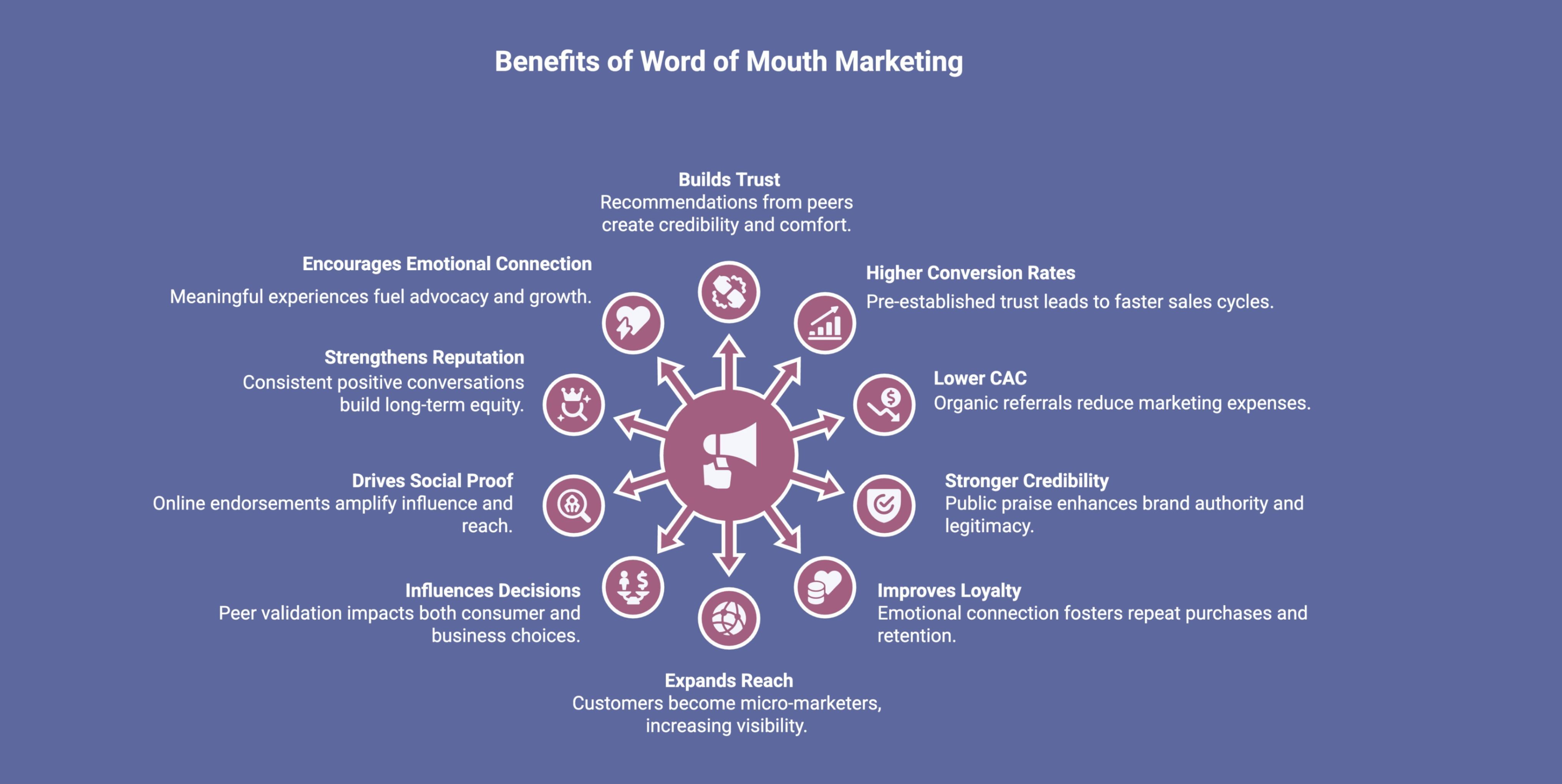
Word of mouth marketing remains one of the most powerful growth drivers because it is rooted in trust rather than promotion. When customers advocate voluntarily, credibility multiplies and acquisition becomes more efficient. Below are the most important advantages businesses experience.
1. Builds Instant Trust
Trust is the foundation of every buying decision. When a recommendation comes from a colleague, friend, or industry peer, it carries built-in credibility and emotional reassurance. Unlike paid advertisements, personal endorsements feel unbiased and authentic, making prospects far more comfortable moving forward with confidence.
2. Higher Conversion Rates
Referral-based leads enter the funnel with pre-established trust, which significantly shortens evaluation time. They typically require less persuasion, raise fewer objections, and move more quickly through the sales process. This results in higher close rates, faster pipeline velocity, and more efficient revenue generation overall.
3. Lower Customer Acquisition Cost (CAC)
Unlike paid marketing channels that require continuous advertising spend, referrals generate momentum organically. While companies may invest in customer experience or referral incentives, the long-term acquisition cost remains lower. Over time, word of mouth marketing becomes one of the most cost-efficient and sustainable growth channels available.
4. Stronger Brand Credibility
When multiple customers publicly praise your product, your brand earns authority and legitimacy. Positive reviews on platforms like Trustpilot and G2 reinforce third-party validation. Consistent positive mentions compound credibility and strengthen long-term market positioning.
5. Improves Customer Loyalty
Customers who actively recommend your brand often feel a deeper emotional connection to it. Advocacy strengthens loyalty because customers become invested in your continued success. This emotional alignment increases retention, repeat purchases, and long-term relationship value beyond a single transaction.
6. Expands Reach Organically
Every satisfied customer becomes a micro marketer within their personal and professional network. Through social media posts, reviews, shared content, and direct recommendations, they extend your brand visibility naturally. This organic exposure expands audience reach without requiring additional advertising budget.
7. Influences B2B and B2C Decisions
Peer validation strongly influences both consumer and business purchasing decisions. In B2B environments, especially, executives rely on referrals, case studies, and community conversations before committing to high-value contracts. Word of mouth marketing examples frequently show the strongest results in the SaaS and professional services industries.
8. Drives Social Proof at Scale
Digital platforms have transformed traditional word of mouth into scalable online influence. Star ratings, testimonials, video reviews, and user-generated content make private endorsements publicly visible. This amplification dramatically increases reach, allowing one positive experience to influence thousands of potential buyers simultaneously.
9. Strengthens Brand Reputation
Consistent positive conversations build long-term reputation equity that compounds over time. Even as competitors enter the market, established trust protects your position. A strong reputation enhances pricing power, reduces vulnerability to negative noise, and creates a durable competitive advantage.
10. Encourages Emotional Brand Connection
The importance of word-of-mouth marketing extends beyond transactional benefits. People naturally share brands that solve meaningful problems, deliver exceptional service, and create memorable experiences. Emotional trust fuels advocacy, and advocacy creates a powerful, self-reinforcing cycle of sustainable growth.
Ultimately, word of mouth marketing transforms satisfied customers into your most credible, influential, and cost-effective growth engine.
If you want to learn how compelling testimonial videos drive trust and action, read this expert guide.
What Are Some Practical Word-of-Mouth Marketing Examples?
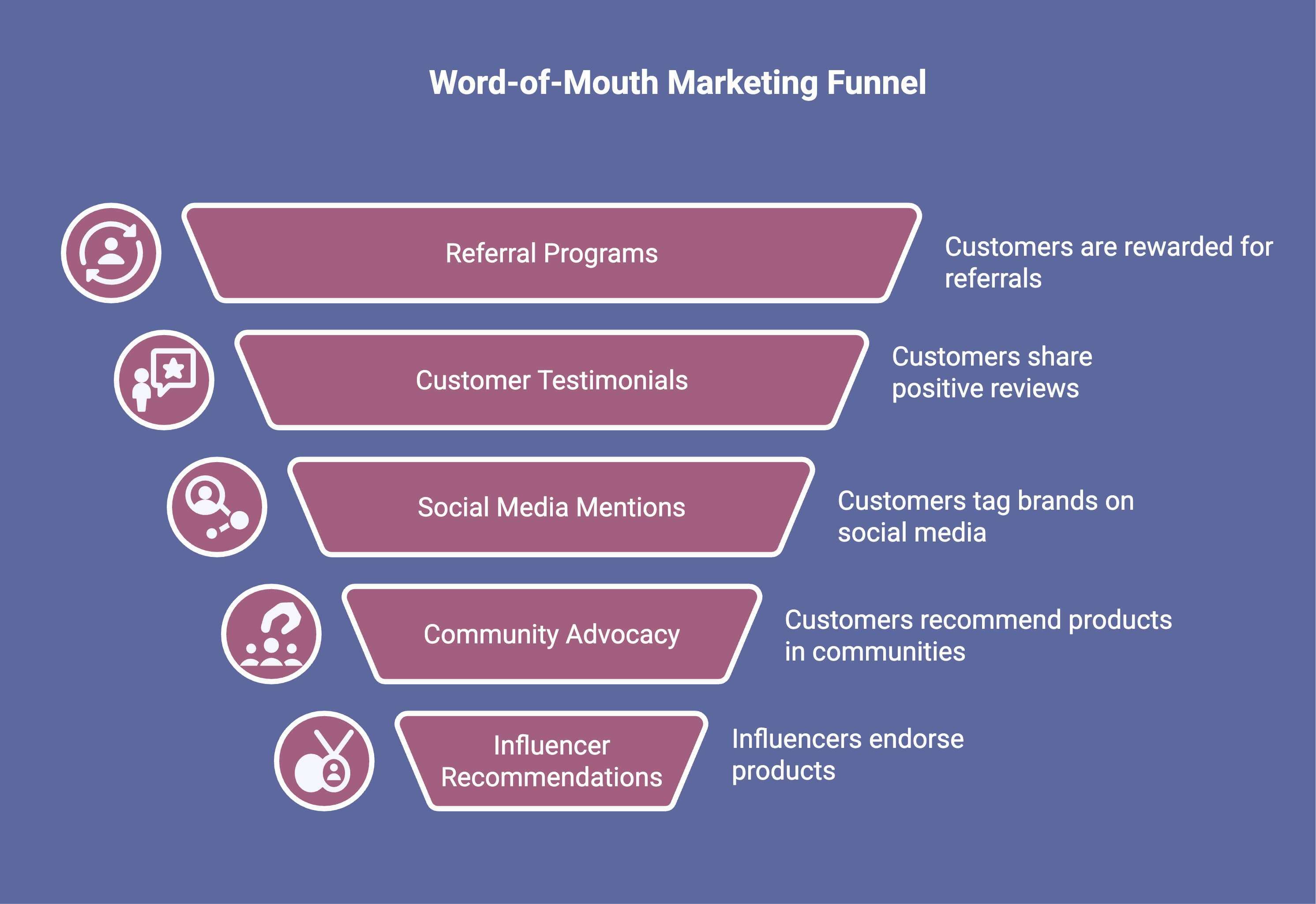
Word of mouth marketing appears in many forms, from structured referral systems to organic online conversations. The most effective strategies encourage customers to share authentic experiences that influence others. Below are real-world examples that demonstrate how conversations translate directly into measurable business growth.
1. Referral Programs
Companies create structured referral programs that reward customers for recommending their product to friends, colleagues, or professional peers. Incentives may include discounts, credits, or exclusive perks. When designed well, referral systems turn satisfied customers into proactive brand advocates who consistently generate qualified new leads.
2. Customer Testimonials
Satisfied clients publish detailed reviews, written testimonials, or video feedback describing their positive experiences. These testimonials often highlight measurable results, service quality, and overall satisfaction. Public validation builds trust quickly and reassures potential buyers who are evaluating similar solutions.
3. Social Media Mentions
Customers naturally tag brands in posts, stories, and public updates when sharing experiences. These mentions expose products to new audiences within personal networks. Organic social sharing often feels more authentic than advertising, increasing engagement and influencing purchasing decisions.
4. Community Advocacy
In professional communities such as Slack groups, LinkedIn communities, or niche forums, users frequently recommend tools they trust. Peer-to-peer recommendations inside these spaces carry strong credibility because they emerge from real problem-solving discussions.
5. Influencer Recommendations
Industry experts and respected voices endorse products they genuinely use and trust. When influencers share authentic experiences rather than scripted promotions, audiences perceive higher credibility. Their recommendations often spark widespread conversations and introduce brands to highly targeted audiences.
According to the Nielsen Global Trust in Advertising Report, 88% of consumers trust recommendations from people they know more than any other form of advertising. These examples show how everyday conversations, when amplified strategically, convert trust into sustainable growth.
What Are the Most Effective Word-of-Mouth Marketing Techniques That Work?
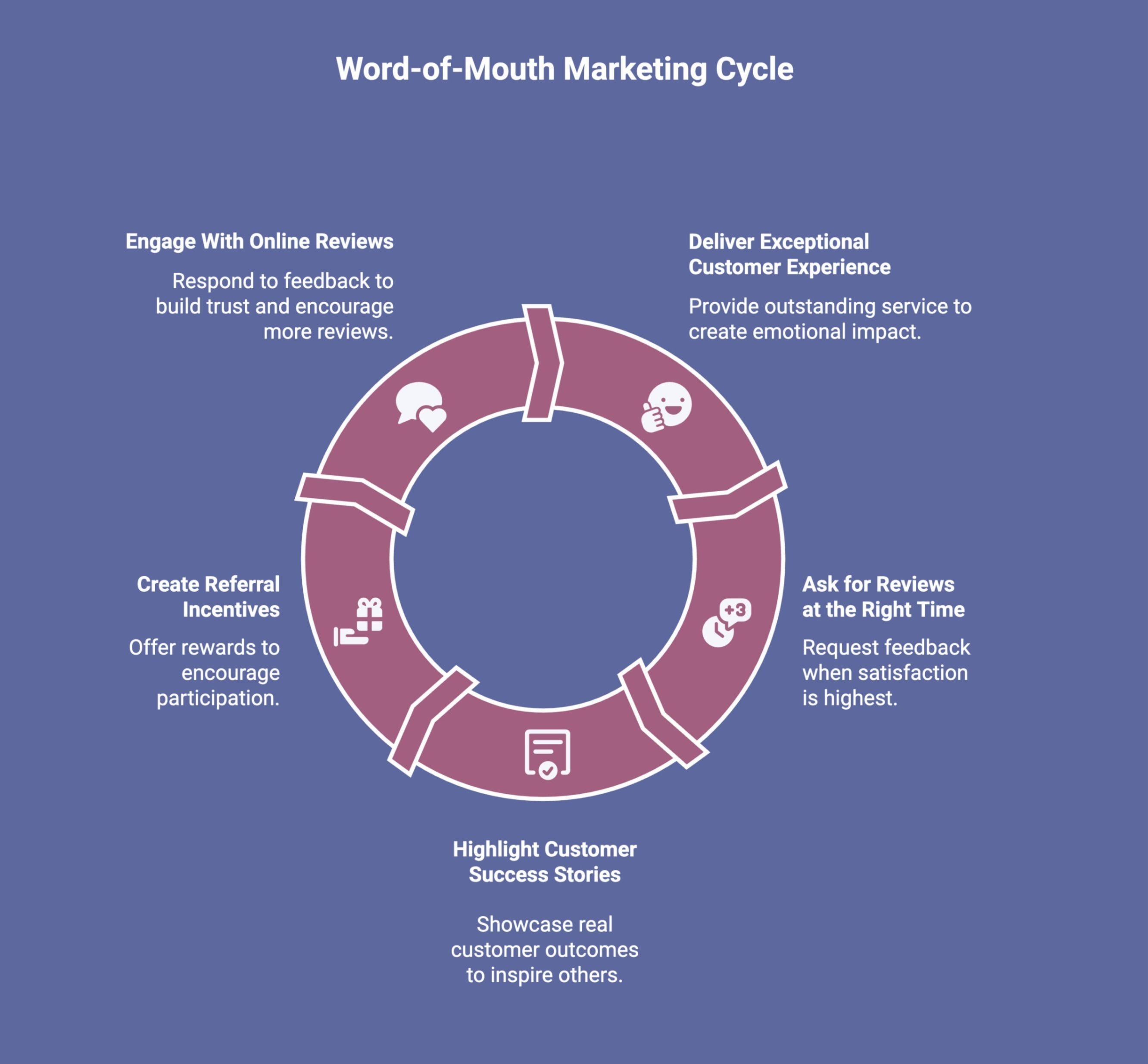
Encouraging organic advocacy requires intention, not luck. Businesses that consistently generate referrals focus on experience, timing, visibility, and engagement. The following word-of-mouth marketing techniques help turn satisfied customers into active promoters who voluntarily amplify your brand.
1. Deliver Exceptional Customer Experience
Outstanding service naturally fuels recommendations. When customers experience reliability, responsiveness, and measurable results, they are far more likely to share their experience with others. Memorable interactions create emotional impact, and emotional impact drives voluntary advocacy without needing heavy promotional pressure.
2. Ask for Reviews at the Right Time
Timing significantly influences response rates. Request feedback immediately after a clear success milestone, such as a completed onboarding or achieved result. When satisfaction is highest, customers are more willing to provide positive reviews and testimonials that influence future buyers.
3. Highlight Customer Success Stories
Showcasing real customer outcomes encourages others to share their experiences as well. Publish detailed case studies, measurable achievements, and transformation narratives. When customers see their peers being recognized, they feel motivated to contribute their own stories.
4. Create Referral Incentives
Structured referral incentives accelerate word-of-mouth activity. Offer meaningful rewards to both the referrer and the new customer to encourage participation. Balanced incentive models strengthen engagement while maintaining authenticity and mutual benefit.
5. Engage With Online Reviews
Responding to online reviews demonstrates transparency and appreciation. Platforms like Trustpilot or G2 allow brands to publicly acknowledge feedback. Active engagement strengthens trust and encourages additional customers to share their experiences.
When applied consistently, these techniques transform everyday satisfaction into a scalable engine of organic growth.
Is Word of Mouth Still Effective in 2026? Data and Channels
Word of mouth marketing remains one of the most powerful growth drivers in 2026 because trust continues to shape purchasing behavior more than advertising exposure.
Here is what verified research confirms:
- According to McKinsey & Company, “A New Way to Measure Word-of-Mouth Marketing, Word of mouth influences 20 to 50% of purchasing decisions, depending on the category
- As per Schmitt, Skiera & Van den Bulte, Journal of Marketing (Wharton School research), referred customers generate approximately 16% higher lifetime value compared to non-referred customers
These findings demonstrate a consistent pattern. Personal recommendations outperform paid channels because they transfer trust, reduce perceived risk, and accelerate decision-making.
In 2026, word of mouth spreads through both traditional and digital pathways:
- Dark social and private messaging, such as WhatsApp, Slack, and email, where recommendations are shared directly between trusted peers
- Online communities, including Reddit, Discord, and LinkedIn groups, where high-intent discussions shape buying decisions
- User-generated content, such as reviews, testimonials, and social posts, that publicly scale private endorsements
- Review platforms that validate decisions and reinforce credibility during evaluation
What has changed is not the psychology, but the scale. Digital platforms amplify individual recommendations into measurable, repeatable influence.
The evidence is clear. Word of mouth marketing is not outdated in 2026. It is one of the most credible, cost-efficient, and conversion-driven strategies available to modern brands.
Why Is Word of Mouth Marketing Important for SaaS?
For SaaS companies, especially in B2B environments, buying decisions involve higher financial commitments and multiple stakeholders. Long sales cycles increase scrutiny, making trust a decisive factor. Word of mouth marketing strengthens credibility and influences internal decision-making.
Word of mouth marketing helps SaaS companies by:
- Reducing perceived risk in high-value purchases.
- Accelerating decision-making across buying committees.
- Supporting internal advocacy from champions and users.
- Increasing win rates in competitive evaluations.
In competitive software markets, trusted recommendations often determine the final choice. If word of mouth marketing is so powerful, the next question becomes: how do you operationalize it at scale?
How Can You Turn Customer Success Into Your Strongest Sales Asset?
SaaSpirin helps B2B and SaaS companies transform happy customers into powerful revenue drivers through done-for-you video testimonials and written case studies.
Since 2020, we’ve supported 100+ B2B brands worldwide by producing professional video case studies, 1,000-1,500-word success stories, quote cards, social media shorts, branded PDFs, and sales-ready slides, all without adding work to your team. Using our TRUST Framework™, we handle everything from customer outreach and interviews to production and distribution guidance.
The result? Stronger credibility, faster sales cycles, and higher conversion rates powered by authentic social proof. We’re not just a video agency; we’re your complete social proof system designed to close more deals.
Ready to let your customers do your marketing? Contact us today to start turning real results into revenue today!
Final Thoughts
Word of mouth marketing is not just a trust builder. It is a scalable growth engine when activated intentionally. The next step is to design experiences worth sharing, systemize how you collect and amplify advocacy, and embed referral triggers across the customer journey.
Instead of hoping customers talk, create structured moments that encourage them to. Build feedback loops, reward loyalty, and make sharing effortless. When advocacy becomes part of your growth strategy, momentum compounds and customer conversations turn into a predictable revenue channel.
Frequently Asked Questions
Why do customers trust word-of-mouth recommendations more than ads?
Customers trust word of mouth more than traditional advertising because recommendations from a family member or peer feel authentic. Genuine customer reviews build consumer trust, while consistent customer service reinforces credibility, influencing consumer behavior and delivering a more meaningful impact than paid promotions.
What impact does word-of-mouth marketing have on brand awareness?
Strong WOM marketing can create a significant impact on brand awareness by encouraging conversations across social networks and social media platforms. When loyal customers share experiences, it strengthens visibility, builds brand loyalty, and supports long-term growth beyond standard campaigns.
Are there any limitations or challenges with relying on word-of-mouth marketing?
While powerful, word of mouth depends on customers' willingness to share experiences. Negative feedback spreads quickly online, especially during new product launches. Without clear marketing strategies and alignment with your target audience, businesses risk losing control over messaging and momentum.
How does the digital age enhance the power of word-of-mouth marketing?
The digital age amplifies referrals through digital marketing, influencer marketing, and rapid sharing across communities. Conversations travel instantly, creating viral marketing effects. Online platforms increase social currency, allowing satisfied customers to influence thousands rather than just close connections.
What are the 5 T's of word-of-mouth marketing?
As explained by Jonah Berger, the 5 T’s include Talkers, Topics, Tools, Taking Part, and Tracking. These elements guide marketing efforts by encouraging engagement, empowering brand ambassadors, and measuring impact to strengthen relationships with potential customers organically.
What are the three main forms of word-of-mouth marketing?
The three main forms of marketing in word-of-mouth include organic sharing, amplified campaigns, and referral-based programs. Businesses often define word of mouth marketing as peer-driven promotion that spreads naturally, especially when supported by strong experiences and community engagement.
Why is word-of-mouth marketing considered cost-effective?
Word-of-mouth marketing is cost-effective because satisfied clients voluntarily promote brands without heavy ad spend. Investing in exceptional customer service and smart loyalty programs encourages advocacy, reduces acquisition costs, and strengthens credibility through authentic conversations that influence buying decisions.
What Are the Most Powerful Word-of-Mouth Marketing Examples?

Want a More Effective Blog? You Need a Brand Persona